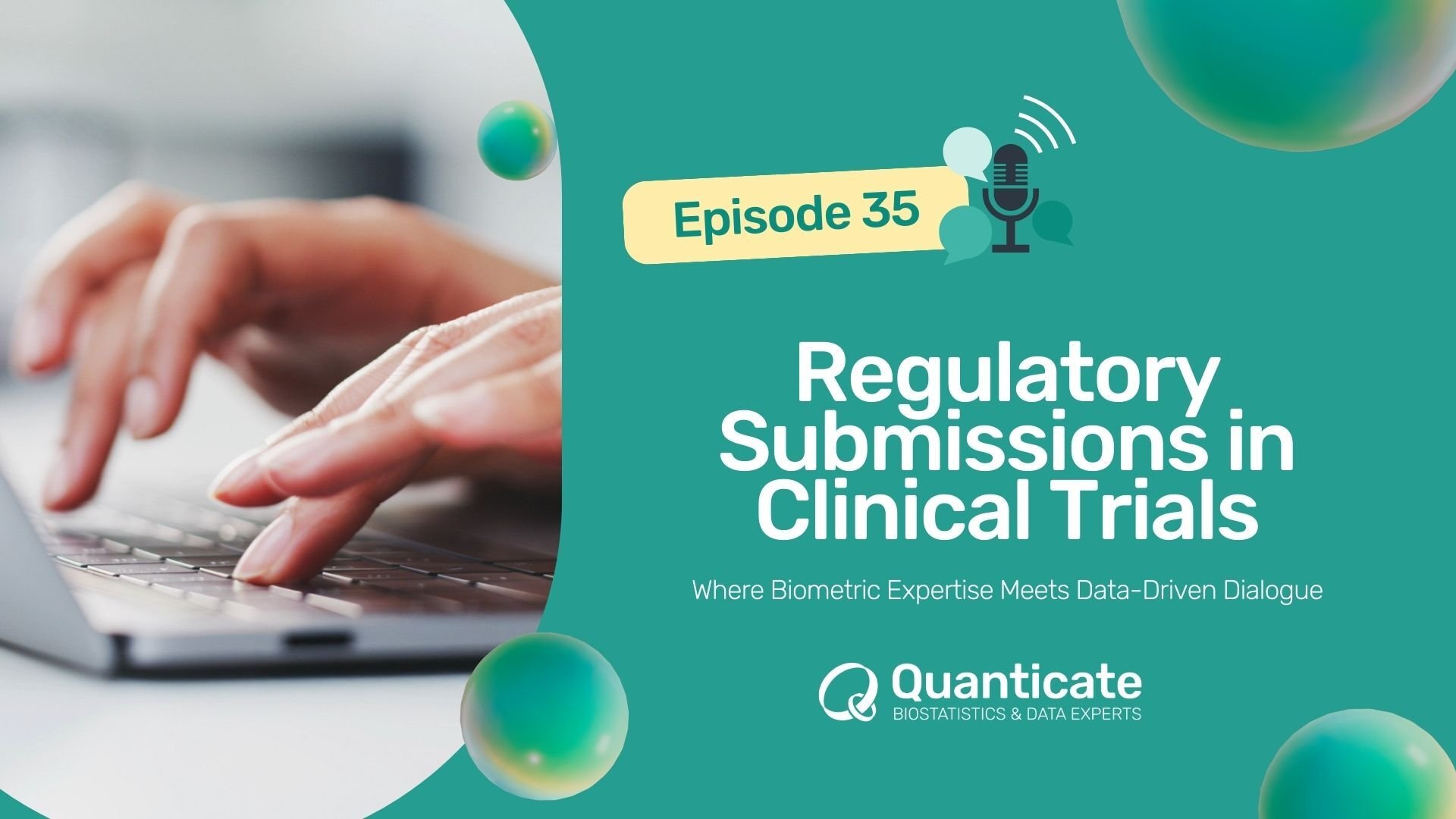
In this QCast episode, co-hosts Jullia and Tom explore regulatory submissions in clinical trials and why they succeed or fail on execution details long before a regulator reaches scientific review. They clarify what a regulatory submission means in day-to-day delivery: a controlled package of documents and data that supports a specific action, from trial start to protocol amendments, ongoing safety reporting, and later applications. The conversation focuses on where timelines are most exposed, including early technical validation checks, authority and portal constraints, and the knock-on effects of version drift when one change is not carried through consistently across dependent artefacts.
They also discuss what ‘good’ looks like operationally without turning it into bureaucracy. That includes using authority-specific checklists, staging reviews so terminology and cross-references stay consistent, running publishing dry runs to catch structural errors early, and treating study data and metadata alignment as submission-critical. Along the way, they flag common failure modes that create avoidable rework, such as late churn from shifting expectations, SME-driven narrative drift, and focusing on validation counts rather than severity, impact, and traceability.
🎧 Listen to the Episode:
Key Takeaways
What Regulatory Submissions Are and Why They Matter
A regulatory submission is the formal package of documents and data provided to a regulator to support a defined activity, such as starting a trial, implementing a substantial protocol change, or meeting periodic safety reporting obligations. Its practical impact sits in timing and control. Many authorities apply early technical validation and administrative checks that can halt progress quickly if the submission is not technically usable, internally consistent, or aligned to required formats. Treating submission readiness as a delivery discipline protects study start-up timelines and reduces disruption when programmes are under pressure.
How Submission Risk Shows Up in Practice
Submission risk often appears first as inconsistency rather than missing science. A protocol amendment can create dependencies across informed consent, supporting documents, and operational guidance, and small mismatches can trigger questions, rework, or delays. On the data side, teams need to manage validation and alignment across deliverables such as SDTM, ADaM, and define.xml, alongside study metadata that must reconcile cleanly across files. Portal and workflow constraints can compound this risk, because even a complete package can stall if it does not fit local submission routes and technical requirements.
Publishing, Validation, and Best Practices
Reliable submissions tend to follow staged work with clear control points. Teams align early to authority expectations, use checklists that reflect the specific submission route, and assign accountability for consistency across the package, not just within individual documents. Staged review helps prevent conflicting input and reduces last-minute churn, while version locking and dependency tracking limit drift when updates occur. Publishing dry runs can surface structural issues such as file placement, link integrity, and electronic package errors before deadlines tighten. For study data, a practical approach is to focus on validation findings by severity and impact, confirm that metadata and identifiers align across datasets and submission files, and retain a traceable record of decisions so post-submission questions can be answered quickly and consistently.
Full Transcript
Jullia
Welcome to QCast, the show where biometric expertise meets data-driven dialogue. I’m Jullia.
Tom
I’m Tom, and in each episode, we dive into the methodologies, case studies, regulatory shifts, and industry trends shaping modern drug development.
Jullia
Whether you’re in biotech, pharma or life sciences, we’re here to bring you practical insights straight from a leading biometrics CRO. Let’s get started.
Tom
Now when you say ‘regulatory submission’ in a trial context, what are we actually talking about?
Jullia
So a regulatory submission is the formal package of documents and data you provide to a regulator to support a specific activity. That might be permission to start a trial, a protocol change mid-study, an ongoing safety report, or a later marketing application. And there’s a step people sometimes forget that sits right up front. Many authorities run technical validation before they get into content, and if the structure, formatting, or required components don’t meet expectations, the package can bounce back quickly. That’s why it can feel brutal under timeline pressure.
Tom
Now there's different kinds of bouncing back such as technical validation problems, completeness issues, and scientific questions. How do you keep those distinctions straight?
Jullia
Think of them as different gates. Technical validation is whether the submission is technically usable and built to the required structure and standards. Completeness checks are about whether there’s enough there to review at all. Scientific questions come later, once the regulator is actually evaluating what you’ve submitted. The key operational point is the first two gates happen early, so preventable issues there can stall a programme fast.
Tom
Now which submission types show up most often around trials?
Jullia
Well trial start submissions are the obvious first one, like Clinical Trial Applications or INDs, depending on region. They usually include the protocol, informed consent materials, investigational product information, and supporting evidence, plus ethics documentation where that’s part of the route. Then you’ve got protocol amendments or substantial modifications during conduct. And you’ve also got periodic safety and progress submissions, like DSURs and updated Investigator’s Brochures, where the timing depends on a clean data cut and controlled source evidence. Later on, marketing applications pull everything together and raise the stakes on consistency across modules and datasets.
Tom
Now you said amendments can ripple, which is the bit people underestimate. What tends to go wrong there?
Jullia
So it’s often the dependencies. A common scenario is a change that tightens monitoring, maybe a dosing adjustment that adds extra visits or extra checks. The protocol is updated, but another document still carries the old visit schedule language, or the informed consent mentions the original number of clinic visits. It’s just a couple of lines, but it’s now a contradiction in a regulated package. And that inconsistency causes delays, because reviewers need clarity and teams then scramble to reconcile versions under deadline.
Tom
Now let’s talk about what “doing it well” looks like. We don’t need perfection, just a pathway that reduces surprises.
Jullia
Well teams that run submissions smoothly treat them as staged work with clear control points. They start by confirming the submission type, the authority expectations, and what technical standards apply, including data standards and file formats. They use an authority-specific checklist, because assumptions don’t travel cleanly across regions and portals. Then they compile with discipline. Lock versions, align terminology, and check cross-references so you’re not publishing a package that contradicts itself. After that, they publish the electronic package and run the technical checks before the final freeze, because it’s much easier to fix structural issues when you still have time.
Tom
When you say “publish the electronic package”, what does that involve day to day?
Jullia
So you’re building the electronic structure that the regulator expects, often an eCTD format where that applies. That includes file placement, document naming conventions, hyperlinks, and the technical backbone like XML. A dry run helps, because it catches the things that don’t show up in a Word review. Broken links, structure errors, a file in the wrong place, an output that didn’t convert cleanly. Those are the issues that can trigger technical validation failures even when the content itself is solid.
Tom
And then there’s the data track. People split “documents” and “datasets” into separate streams. Where does that split cause friction?
Jullia
It happens right at validation and alignment. For study data, you’re typically validating SDTM, ADaM, and the define.xml, and checking that required files are present and consistent. Teams sometimes focus on the count of validation findings, but what matters is severity and impact, plus whether the metadata lines up. Study-level metadata can trip you up, including tagging files like stf.xml and basic identifiers that should match cleanly across datasets and metadata. If those don’t align, you end up debugging at the worst possible time.
Tom
So what you’re saying is you can have great science, but if the package isn’t technically sound and aligned, you don’t even get to the science. Does that sound right?
Jullia
That’s spot on. And it’s worth remembering that the “technically sound” part includes the workflow around how you submit, not just what you submit. Different regions have different portals and constraints. For EU trials, CTIS shapes what you can provide and how you route it. Elsewhere, you’re working within different electronic submission processes and expectations. If your package is ready but you’ve missed a portal constraint or an administrative requirement, you lose days when you can least afford them.
Tom
Let’s move onto the avoidable pitfalls. What are some of the patterns you keep seeing?
Jullia
So one is late churn because the regulatory strategy wasn’t settled early enough. Target markets, required components, and data expectations shift late, and that increases the risk of inconsistency. Another is changing requirements without active tracking. Changes happen, but teams need a clear record of decisions and what they affected, otherwise version control becomes guesswork. You also see narrative drift when many subject matter experts contribute. Endpoints get described slightly differently in different parts of the package, or risk language varies enough to create confusion. And then there’s basic document control. Weak templates, informal late edits, and rushed approvals increase the chance you submit something internally inconsistent.
Tom
Yeah that SME drift is real. So how do teams keep coherence without turning it into a months-long editorial project?
Jullia
They set ownership and review flow early, and they keep it practical. You need someone accountable for consistency across the package, not just for individual documents. Review sequencing helps too. If everyone reviews everything at once, you get conflicting comments and slow decisions. A staged approach works better. First agree the core content and key descriptions, then lock terminology and cross-references, then run the technical checks. And teams need realistic turnaround assumptions. If the plan relies on instant reviews in the final week, it usually ends with rushed changes and rework.
Tom
Now we know that after you hit submit, the job doesn’t end. What should teams plan for?
Jullia
They should plan for questions and requests that need fast, evidence-backed responses. Regulators may come back with information requests that require point-by-point replies supported by controlled source documentation. That’s where a clean repository and traceable version history pay off, because you can retrieve what you need quickly and respond consistently. It also supports inspection readiness, because you’re able to demonstrate what was submitted, when, and how key decisions were made, without trying to reconstruct the story from email threads.
Tom
Now if someone listening has a submission coming up, what would be the quick wins and the common traps to look out for?
Jullia
Good question. First quick win: confirm the submission type and authority expectations early and use the right checklist for that authority and portal. Second: lock versions and manage dependencies, especially around protocol changes, because dependent documents drift very easily. Third: run a publishing dry run before freeze so you catch structural and technical issues while there’s still time. Regarding traps, leaving review and sign-off to the final days is a big one. That’s when unresolved comments and late changes create inconsistencies. Another trap is treating validation as a numbers game. Look at severity and impact, and make sure metadata and identifiers align, not just the datasets.
Tom
Now before we wrap, what should people remember when timelines are tight and everyone’s trying to move fast?
Jullia
Clarity and control protect speed. If the team is clear on what they’re filing and they build the package with disciplined version control, you reduce the risk of early technical setbacks. A staged workflow helps because it forces alignment before publishing and validation. And keeping a decision log as you go makes change manageable. When requirements shift, you can trace what changed and what needs updating, instead of relying on memory and hope.
Tom
That’s what keeps programmes moving.
Jullia
Exactly. It’s the kind of work nobody celebrates, but everyone notices when it goes wrong. Keeping submissions boring is a good outcome. It also makes collaboration across clinical, regulatory, data management, programming, and medical writing much easier, because people are working from the same controlled set of artefacts.
Tom
Anything else you’d add as a final reminder?
Jullia
Don’t assume you can reuse formats and assumptions across authorities without checking. Even small differences in expectations or portal rules can disrupt a timeline. And if you’re under pressure, pick the control points you won’t compromise on. Version locking, dependency checks, and technical dry runs are the ones that prevent the most avoidable delays.
With that, we’ve come to the end of today’s episode on regulatory submissions in clinical trials. If you found this discussion useful, don’t forget to subscribe to QCast so you never miss an episode and share it with a colleague. And if you’d like to learn more about how Quanticate supports data-driven solutions in clinical trials, head to our website or get in touch.
Tom
Thanks for tuning in, and we’ll see you in the next episode.
About QCast
QCast by Quanticate is the podcast for biotech, pharma, and life science leaders looking to deepen their understanding of biometrics and modern drug development. Join co-hosts Tom and Jullia as they explore methodologies, case studies, regulatory shifts, and industry trends shaping the future of clinical research. Where biometric expertise meets data-driven dialogue, QCast delivers practical insights and thought leadership to inform your next breakthrough.
Subscribe to QCast on Apple Podcasts or Spotify to never miss an episode.

.png?width=110&name=ACDM_Corporate_Member_Badge_135%20(3).png)
.png?width=140&name=cdisc_gold_partner_80h%20(2).png)
