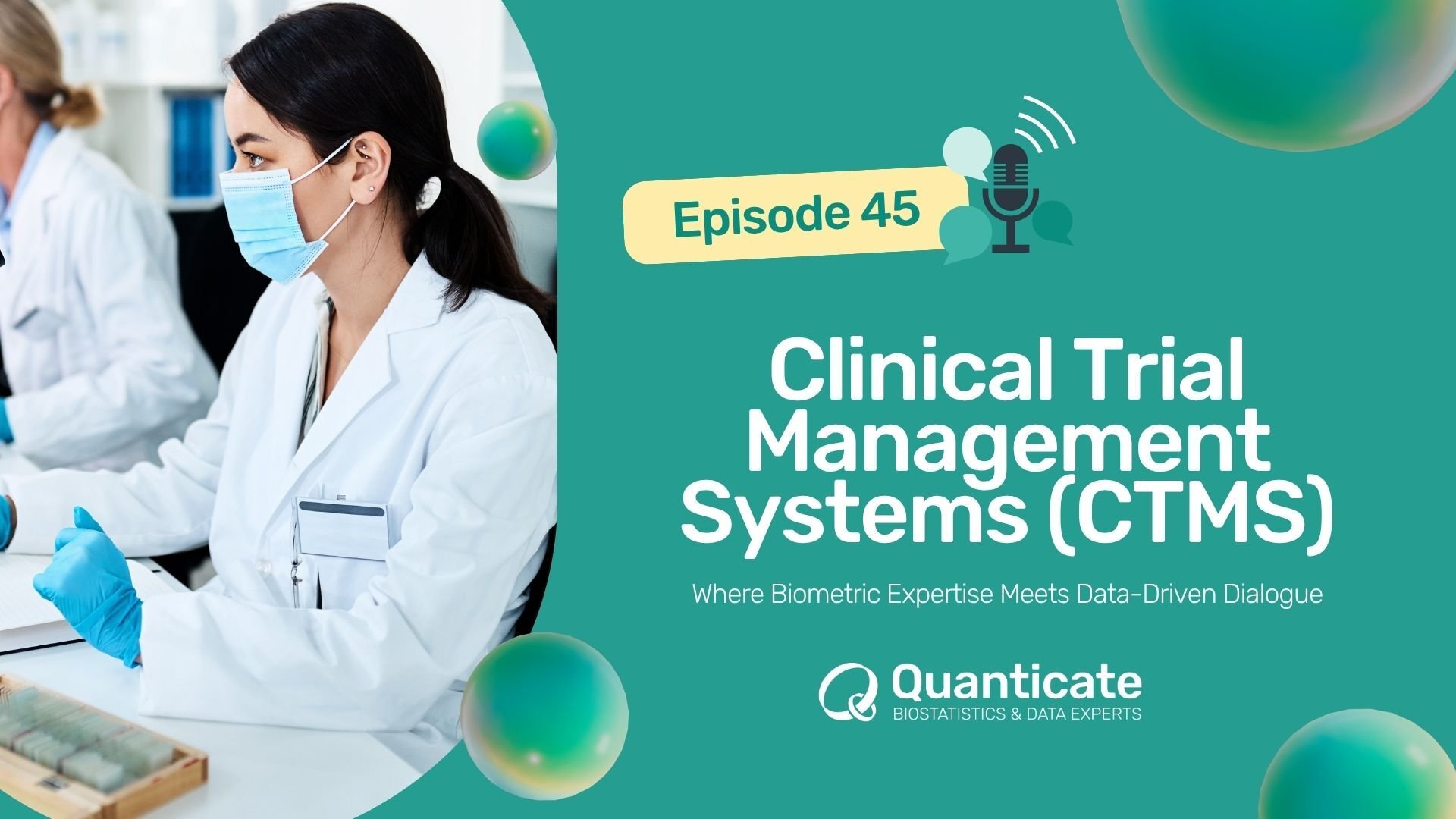
Clinical trial management systems play a central role in how studies are planned, tracked and managed. In this QCast episode, co-hosts Jullia and Tom explore what a CTMS actually does, how it differs from electronic data capture, and why it matters for sponsors, CROs and clinical operations teams managing complex trial activity across sites, systems and stakeholders.
The discussion looks at practical pressure points that can weaken oversight, from recruitment tracking in spreadsheets to monitoring follow-up buried in email threads. It also considers how CTMS supports risk-based monitoring, current expectations around active and documented oversight, hybrid and decentralised trial models, system integration, vendor evaluation and total cost of ownership. Used well, a CTMS helps teams see issues earlier, document decisions more clearly and reduce reliance on disconnected trackers.
🎧 Listen to the Episode:
Key Takeaways
What a CTMS actually manages
A CTMS is focused on the operational side of a clinical trial. It helps teams track areas such as site activation, milestones, monitoring activity, recruitment, documents, payments, resources and oversight actions. This is different from EDC, which captures clinical data from case report forms, visits, labs and patient assessments.
Why operational visibility affects trial decisions
A useful CTMS gives teams a clearer view of what is happening across the study while there is still time to respond. If recruitment is slipping, query resolution is delayed, or a site has repeated protocol deviations, the issue can be investigated before it becomes a larger timeline or compliance concern. This visibility supports risk-based monitoring because teams can focus attention where participant safety, data integrity or study delivery may need closer review.
How to choose a CTMS that fits real workflows
The longest feature list is not always the best indicator of CTMS value. Teams need to understand how the system handles real scenarios such as protocol amendments, dosing changes, missed visit windows, delayed lab data, site payments and urgent monitoring follow-up. Implementation, validation, configuration, training, integrations and ongoing support all affect whether the system strengthens oversight or pushes teams back into unofficial spreadsheets and manual workarounds.
Full Transcript
Jullia
Welcome to QCast, the show where biometric expertise meets data-driven dialogue. I’m Jullia.
Tom
I’m Tom, and in each episode, we dive into the methodologies, case studies, regulatory shifts, and industry trends shaping modern drug development.
Jullia
Whether you’re in biotech, pharma or life sciences, we’re here to bring you practical insights straight from a leading biometrics CRO. Let’s get started.
Tom
Clinical trial management systems, or CTMS, can sound fairly administrative at first. But they sit right in the middle of how a trial actually runs, don’t they?
Jullia
Yes, so a CTMS is the central system for planning, tracking and managing the operational side of a clinical trial. So we’re talking about milestones, site activation, monitoring activity, recruitment, documents, payments, resources and oversight.
Tom
Now what's the difference between a CTMS and an EDC?
Jullia
So EDC is focused on clinical data capture, so the data entered from case report forms, visits, labs and patient assessments. However, CTMS looks at the operational picture around that activity. It asks things like, has the site been activated? Are monitoring visits happening on time? Are queries taking too long to resolve? Has a protocol deviation been documented and followed up?
Tom
So the EDC tells you what’s being collected, while the CTMS helps show whether the study is being run under control.
Jullia
Exactly. And when those systems connect properly, the sponsor or CRO gets a much clearer view. You don’t want recruitment tracked in one spreadsheet, monitoring reports in another place, and site payments somewhere else entirely. The CTMS gives teams a shared operational baseline.
Tom
Can you give a concrete example of where that shared baseline changes a decision?
Jullia
Well imagine a multicentre study where recruitment is slipping. Without a strong CTMS, the team might only realise in a monthly meeting that several sites are behind. With current dashboards, they can see enrolment and dropout patterns earlier. Then they can redirect CRA time, support a slower site, or decide whether another site needs to be activated.
Tom
And that’s different from just recording the delay after it has already affected the timeline?
Jullia
Yes, because a useful CTMS helps teams spot drift while there’s still time to act. That could relate to recruitment, monitoring visit completion, document approvals, site payments, or repeated missed visit windows at a particular site.
Tom
So how does CTMS fit with risk-based monitoring and risk-based quality management?
Jullia
It gives teams the operational signals they need to focus attention. Risk-based monitoring means looking more closely where participant safety and data integrity may be most at risk. A CTMS can highlight delayed query resolution, repeated deviations, missed milestones or unusual site performance. Those indicators help teams decide where monitoring effort should go.
So while system doesn’t replace judgement, it gives people better evidence for where to look. If a site has several protocol deviations and slow data entry, that doesn’t automatically mean there’s a serious issue. But it does tell the team to investigate, ask better questions and document the rationale for any action taken.
Tom
There’s a regulatory angle here as well, especially with ICH E6(R3). What should people take from that?
Jullia
That oversight needs to be active, proportionate and documented. ICH E6(R3) places more emphasis on quality by design, risk-based approaches, data governance and the use of technology in modern trials. A CTMS supports that by showing who did what, when they did it, what changed and why decisions were made.
Tom
Let me challenge that slightly. Now some teams might say, “We already have spreadsheets, email threads and a shared drive. We can show what happened.” But what’s missing there?
Jullia
You can often reconstruct events, but reconstruction isn’t the same as controlled oversight. Spreadsheets are easy to duplicate, email threads are easy to miss, and shared drives can fill up with old versions. In a regulated trial, version control, role-based access, approvals and audit trails matter.
So compliance has to be part of the workflow. If a protocol amendment changes the visit schedule, the CTMS should help track the operational impact. Which sites need updated documents? Which milestones shift? Does the monitoring plan need adjustment? Are budgets or vendor timelines affected? That’s hard to manage reliably when updates are scattered across disconnected files.
Tom
What about decentralised or hybrid trials? They add more moving pieces, so does CTMS become more important?
Jullia
Usually, yes. Decentralised elements can include eConsent, virtual visits, remote monitoring, patient-facing tools and data coming from several systems. The CTMS doesn’t collect all of that clinical data, but it helps coordinate the operational oversight. The team still needs to know whether an activity happened, whether it met protocol requirements and whether follow-up is needed.
Now this makes integrations a real issue. A CTMS is much more valuable when it connects with systems such as EDC, eTMF, safety platforms, finance tools and patient-facing applications. Manual re-entry creates delay and error. Secure data exchange gives teams a more current and reliable operational picture.
Tom
Now people often talk about a “single source of truth” as if one system holds everything. But that’s not really what we mean, is it?
Jullia
Not really, no. But it doesn’t mean every data point lives in one database. It just means there’s a trusted, governed view of the information needed to make decisions. For CTMS, the operational status should be clear enough that sponsors, CROs and sites aren’t arguing over whose tracker is correct.
Tom
Now when organisations choose a CTMS, where do they tend to go wrong?
Jullia
One mistake is starting with the longest feature list. While features matter, fit matters more. The system has to reflect how studies actually run, including trial phase, therapeutic area, outsourcing model, site footprint and reporting needs. A platform can look impressive in a demonstration and still create extra admin if it doesn’t match the workflow.
Tom
Can you give an example?
Jullia
Well, take site payments. If a study has milestone-based payments, grants, pass-through costs and frequent amendments, the finance functionality needs to handle that without constant workarounds. Or think about monitoring reports. If CRAs have to enter the same information in several places, time is lost and data quality can suffer.
Tom
So user experience matters too, then, because study teams are already stretched.
Jullia
Very much. A CTMS can be technically capable and still fail if people avoid using it. Training, onboarding and role design all matter. Users should see how it helps them do the job, whether they’re checking activation status, finding an approved document, reviewing overdue actions or seeing which site needs support.
Tom
So what should teams ask vendors during evaluation, beyond the usual security and compliance questions?
Jullia
They should ask for demonstrations based on real trial scenarios. Don’t just watch a perfect workflow. Ask how the system handles a protocol amendment, a dosing change, a missed visit window, delayed lab data or urgent monitoring follow-up. It’s also worth asking about integration depth, configuration effort, reporting flexibility, support, references and total cost of ownership.
Tom
So total cost of ownership can be hidden, can’t it?
Jullia
Yes, but the licence fee is only one part. Teams also need to consider implementation, validation, configuration, training, integrations, change management and ongoing support. A cheaper system can become expensive if people end up building unofficial trackers around it.
Tom
We’ve covered a lot today. What are the essentials someone should remember?
Jullia
First, a CTMS is the operational backbone of a trial, not just a tracker. Second, its value comes from visibility. Seeing risks, delays, workload and compliance evidence early enough to respond. Third, the best system is the one that fits real workflows and connects well with the wider trial technology environment.
Tom
Before we close, what would you say to a sponsor or CRO that already has a CTMS but suspects it isn’t giving them enough oversight?
Jullia
I’d look first at where teams still step outside the system. Are they using spreadsheets for recruitment, email for document approvals, or manual notes for monitoring follow-up? Those workarounds often show where the CTMS is underconfigured, poorly integrated or not trusted.
A good CTMS should help teams act earlier, document decisions clearly and maintain inspection readiness without a last-minute scramble. It should support risk-based quality, data governance and collaboration across sponsors, CROs and sites. Really, the system is only useful if it changes behaviour, not just where information is stored.
When it’s well chosen and well used, it gives teams a clearer view of the study and a better chance of catching issues before they become larger delays or compliance concerns.
With that, we’ve come to the end of today’s episode on clinical trial management systems. If you found this discussion useful, don’t forget to subscribe to QCast so you never miss an episode and share it with a colleague. And if you’d like to learn more about how Quanticate supports data-driven solutions in clinical trials, head to our website or get in touch.
Tom
Thanks for tuning in, and we’ll see you in the next episode.
About QCast
QCast by Quanticate is the podcast for biotech, pharma, and life science leaders looking to deepen their understanding of biometrics and modern drug development. Join co-hosts Tom and Jullia as they explore methodologies, case studies, regulatory shifts, and industry trends shaping the future of clinical research. Where biometric expertise meets data-driven dialogue, QCast delivers practical insights and thought leadership to inform your next breakthrough.
Subscribe to QCast on Apple Podcasts or Spotify to never miss an episode.

.png?width=110&name=ACDM_Corporate_Member_Badge_135%20(3).png)
.png?width=140&name=cdisc_gold_partner_80h%20(2).png)
